
- English
- Español
- Português
- русский
- Français
- 日本語
- Deutsch
- tiếng Việt
- Italiano
- Nederlands
- ภาษาไทย
- Polski
- 한국어
- Svenska
- magyar
- Malay
- বাংলা ভাষার
- Dansk
- Suomi
- हिन्दी
- Pilipino
- Türkçe
- Gaeilge
- العربية
- Indonesia
- Norsk
- تمل
- český
- ελληνικά
- український
- Javanese
- فارسی
- தமிழ்
- తెలుగు
- नेपाली
- Burmese
- български
- ລາວ
- Latine
- Қазақша
- Euskal
- Azərbaycan
- Slovenský jazyk
- Македонски
- Lietuvos
- Eesti Keel
- Română
- Slovenski
- मराठी
- Srpski језик
China Grafit isostatik Pengilang, Pembekal, Kilang
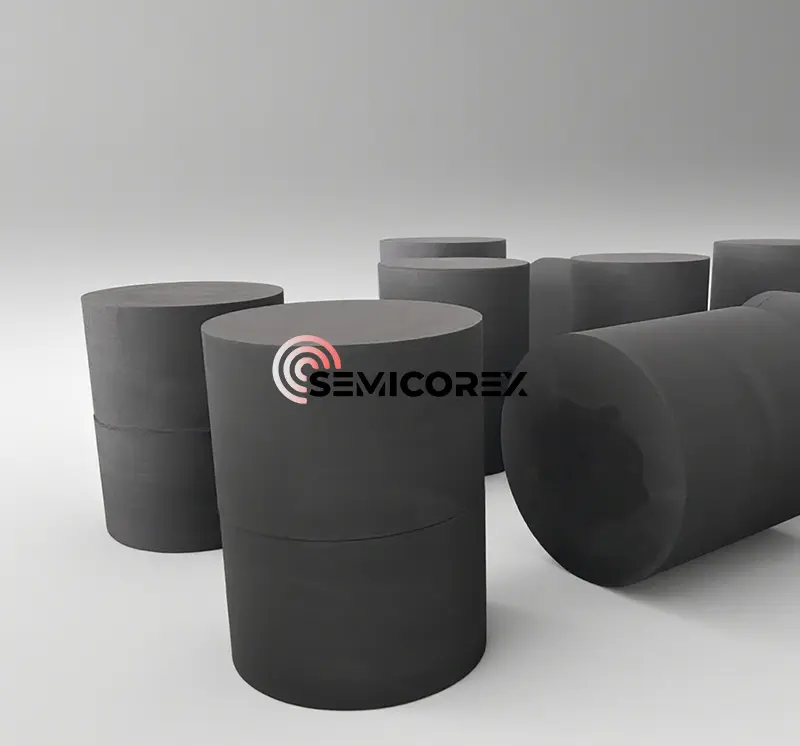
Carbon/graphite material molding essentially involves increasing the density of the powder mixture and ensuring close contact between the aggregate and binder to produce a green body with a desired size, morphology, and minimal machining allowance. The four main molding methods are extrusion, compression molding, vibration molding, and isostatic pressing. Common carbon/graphite materials on the market (for example, charcoal used for household fires) are mostly formed using hot extrusion and compression molding (cold or hot). Isostatic pressing offers superior molding performance.
The principle of isostatic pressing is based on Pascal's law: pressure applied to a medium (liquid or gas) in a sealed container is uniformly distributed in all directions, with the pressure on the surface being proportional to the surface area. Isostatic pressing involves placing a sample, enclosed in a sealed container, within a high-pressure cylinder. Leveraging the incompressible nature of the liquid medium and its ability to uniformly transmit pressure, the sample is uniformly pressed from all directions. When the fluid is injected into the cylinder, the pressure is evenly transmitted in all directions according to the principles of fluid mechanics. The sample in the cylinder is then subjected to uniform pressure in all directions.
Due to the isostatic pressing method, isostatically pressed graphite exhibits excellent isotropy, with properties independent of shape, size, or sampling direction. The material possesses a dense microstructure, high mechanical strength, high surface hardness, and oxidation resistance. Strong performance and high-temperature resistance; the material has excellent thermal shock resistance and is less susceptible to cracking under rapid cooling and heating conditions.
1. Isotropy
Different molding methods result in different properties in different directions. This is primarily reflected in resistivity, thermal conductivity, mechanical properties, and thermal expansion coefficient. The general measurement method is to sample the product perpendicular to and horizontally from the pressure surface, measure the properties separately, and then divide the smallest value by the largest value to obtain the isotropy ratio.
Traditional carbon/graphite products exhibit significant anisotropy, i.e., the properties of the product are different in the directions perpendicular to and horizontal to the pressure surface. The corresponding difference in performance is generally greater than 1:1.1, hence the term anisotropy. In many cases, this difference is fully exploited, and the greater the difference, the better. Examples include graphite electrodes for steelmaking and brushes for motors. Many applications, such as EDM and single-crystal silicon thermal field applications, increasingly require carbon/graphite products to exhibit isotropy (with an orientation ratio within the 1:1.05 range).
2. Large Dimensions
The market is increasingly demanding larger product sizes. For example, single-crystal silicon products have grown from 6- and 8-inch sizes to 12-inch sizes. The size of graphite materials used in thermal fields is also increasing. This is also increasing. Similar trends are seen in other related industries. Graphite for EDM, continuous casting, and nuclear reactors also requires large-scale products. This is difficult to achieve using molding and extrusion methods. The primary problem with large-scale product production is calcination cracking, and the larger the product, the higher the chance of calcination cracking.
3. Fine Structure
As a structural material, it requires high physical and chemical properties. On the one hand, the finer the particle size of the carbon particles that make up the carbon/graphite material, the denser its texture and the higher its mechanical strength.
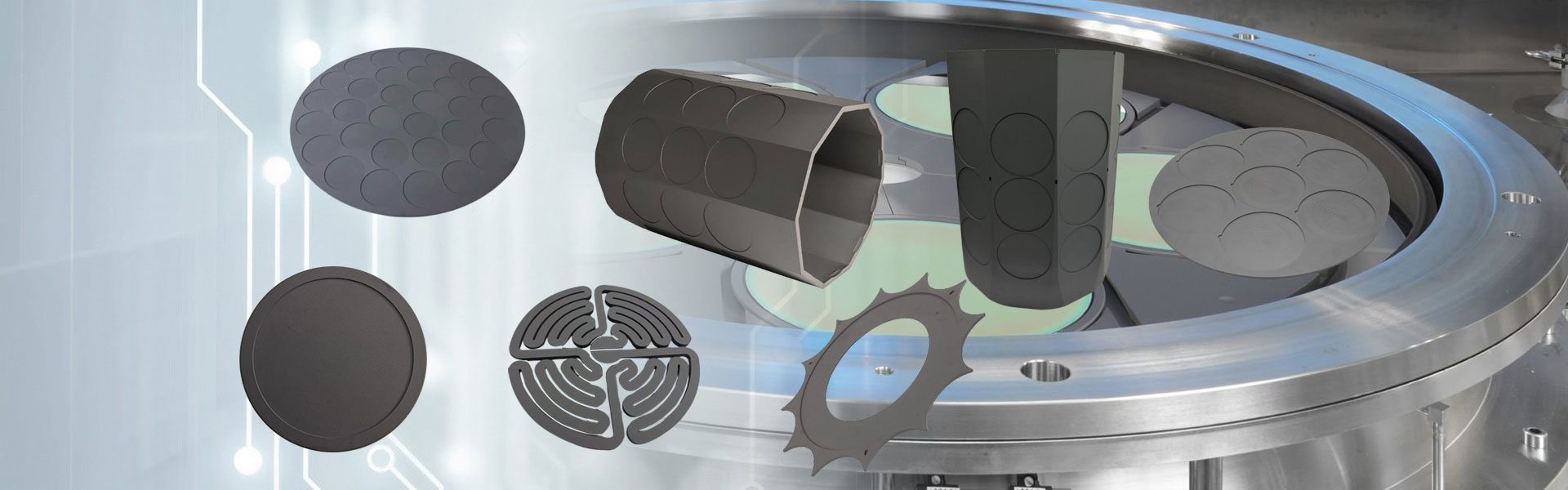
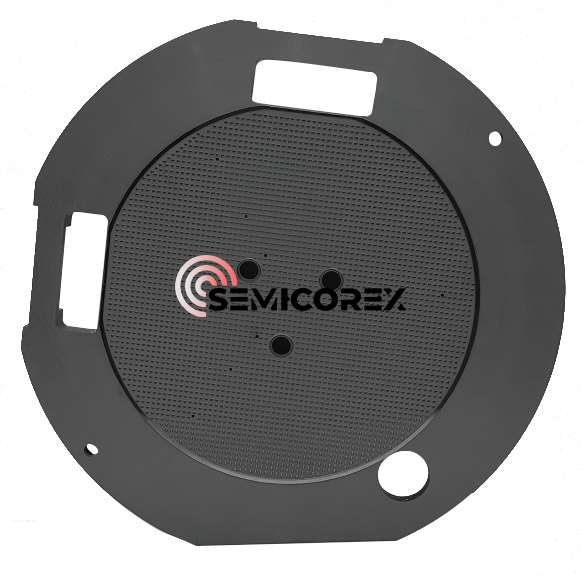
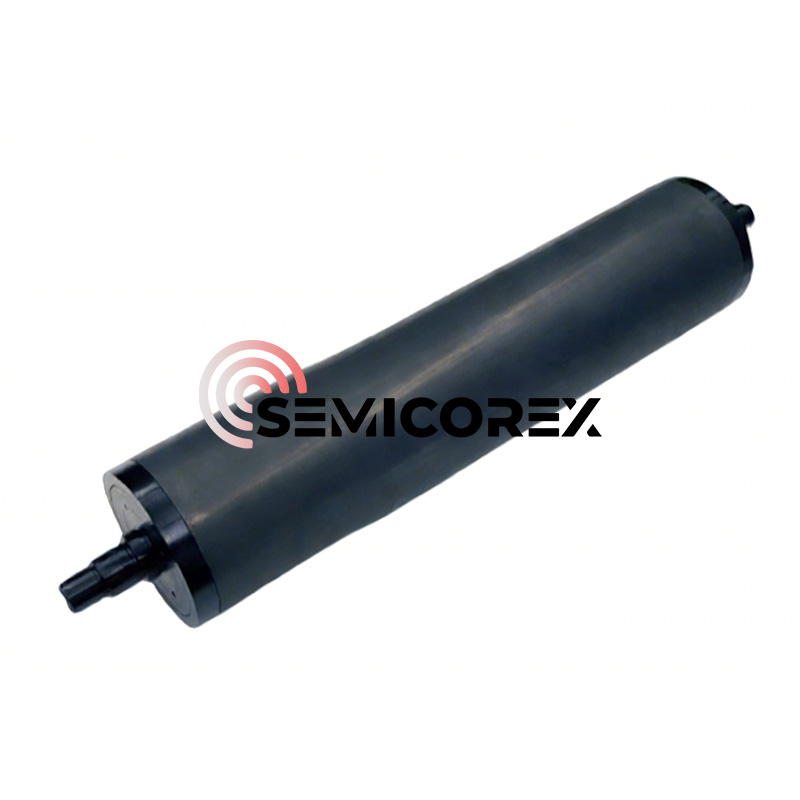
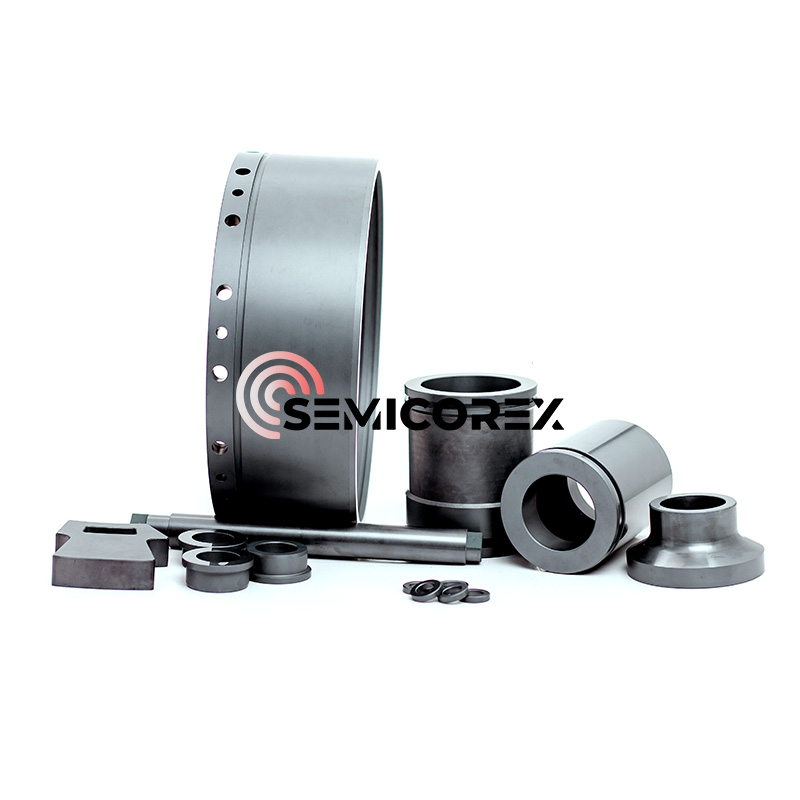
Isostatically pressed graphite is widely used in semiconductor manufacturing processes. It is used in graphite components for the hot zone of single crystal growth furnaces, such as crucibles, heaters, flow guides, and insulation covers; and in graphite components used in epitaxial processes.
- View as
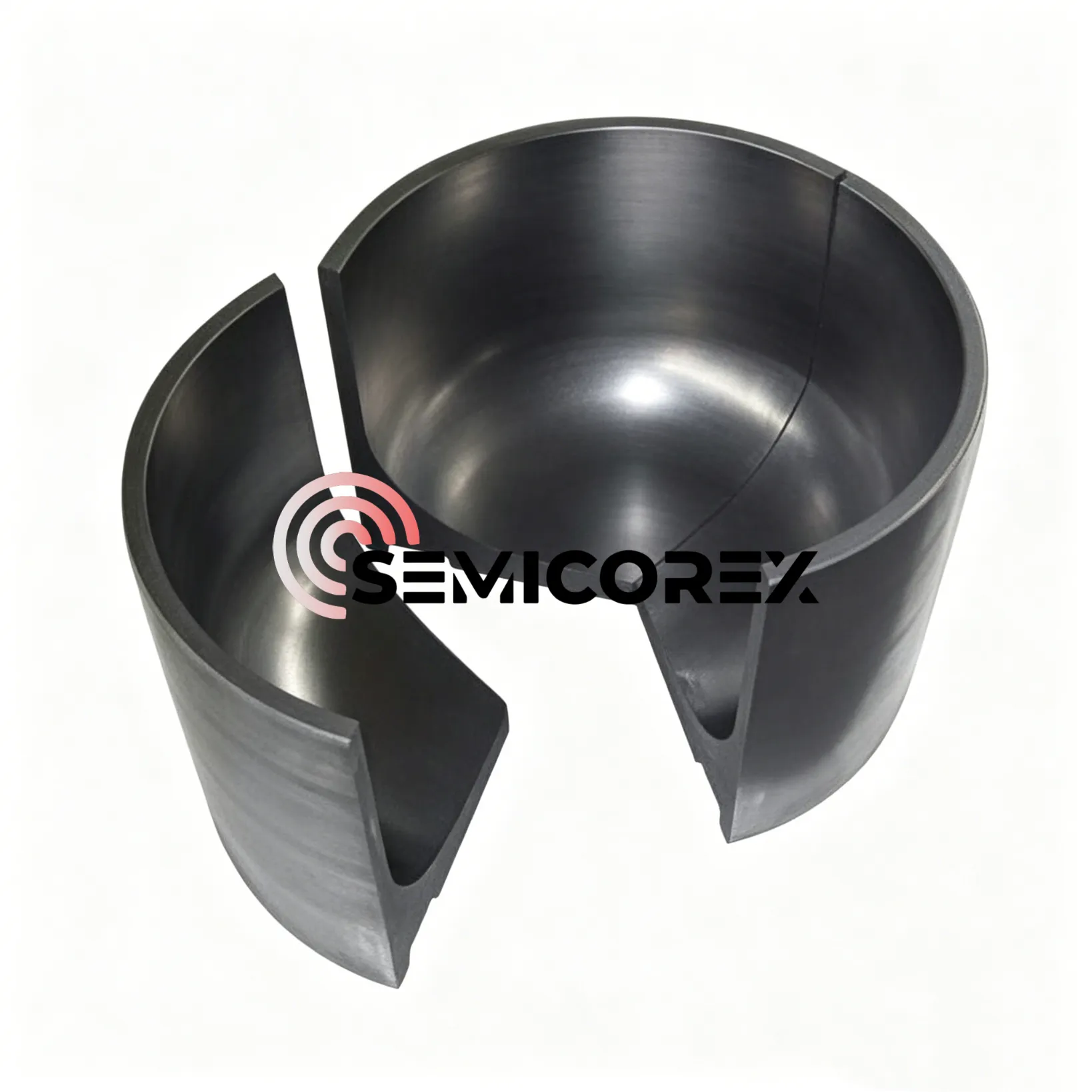
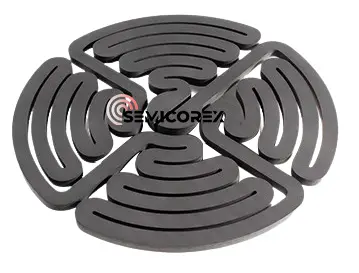
Pisau Grafit Tiga Keping
Pisau grafit tiga keping semicorex ialah bekas grafit belah berprestasi tinggi yang direka khas untuk proses pertumbuhan silikon kristal tunggal. Ideal untuk rawatan haba semikonduktor mewah, mangkuk pijar grafit tiga keping Semicorex boleh menyokong pijar kuarza dan bahan dalamannya dengan pasti untuk mencapai pertumbuhan terkawal struktur kristal tunggal.
Baca LagiHantar Pertanyaan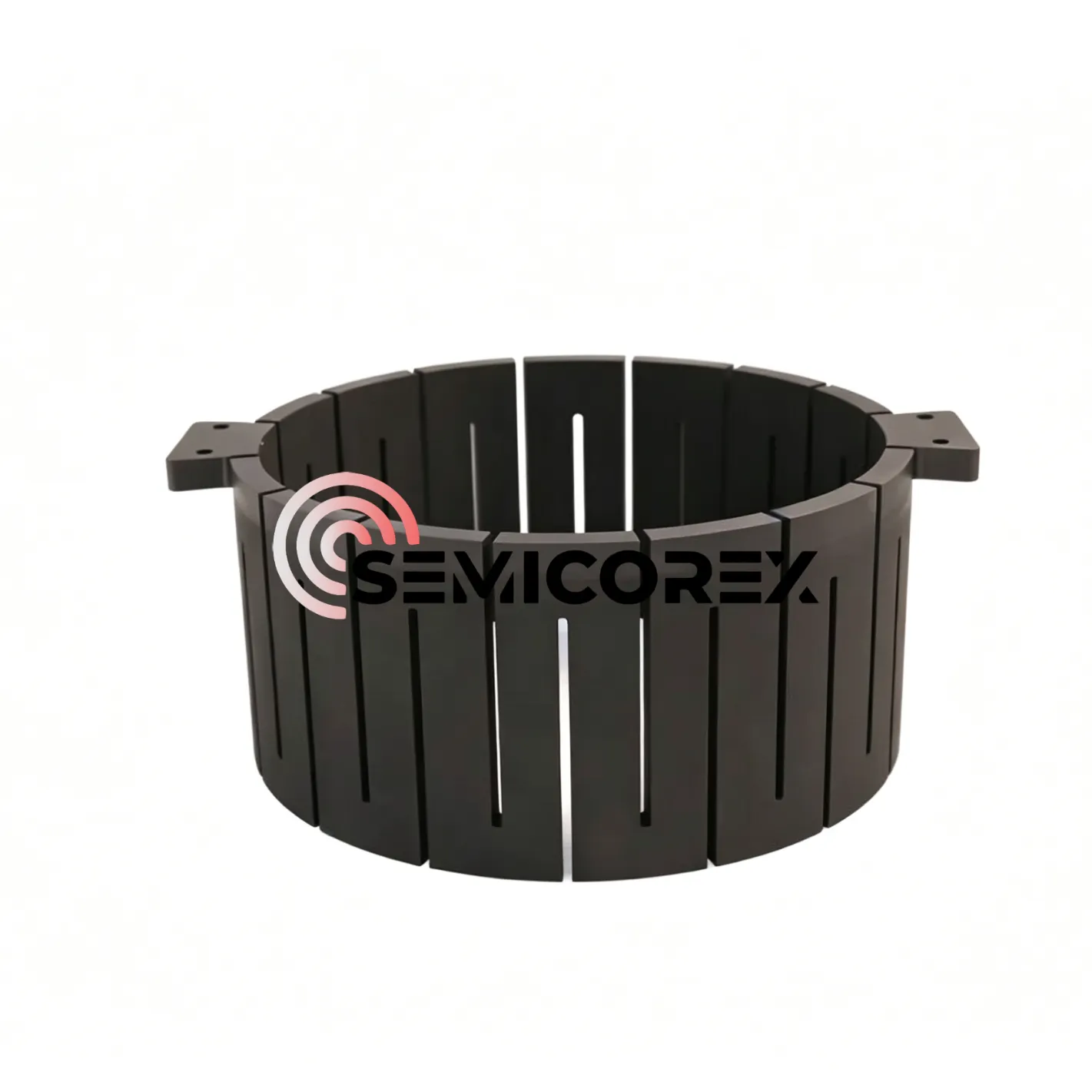
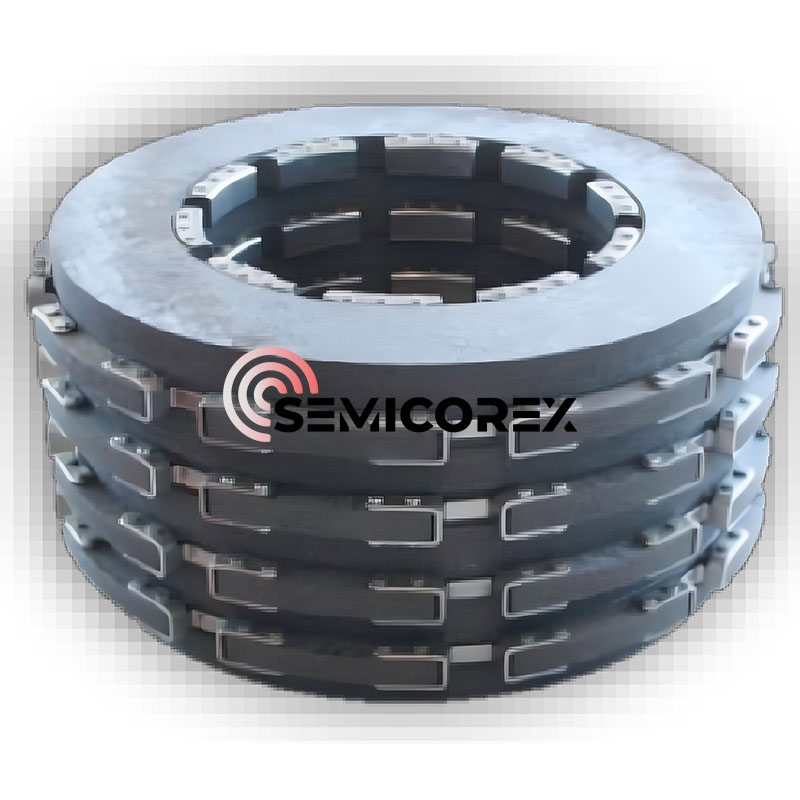
Pemanas Grafit Jenis Lengan
Pemanas grafit jenis lengan semicorex, elemen pemanasan kecekapan tinggi, digunakan secara meluas dalam relau pertumbuhan kristal tunggal. Pemanas grafit jenis lengan semicorex ialah komponen pemanasan penting yang digunakan secara meluas dalam relau kristal tunggal, direka bentuk khusus untuk pertumbuhan silikon monohabluran berkualiti tinggi. Memilih Semicorex ialah memilih penyelesaian rawatan pemanasan yang ideal.
Baca LagiHantar Pertanyaan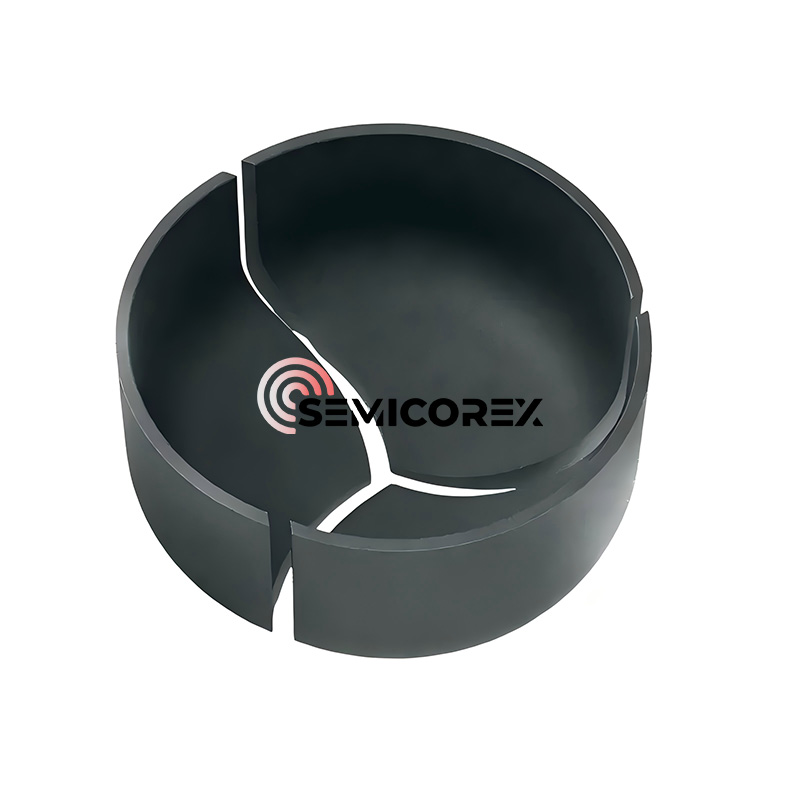
Pisau Grafit Tiga kelopak
Pisau Grafit Tiga kelopak berketulenan tinggi Semicorex menampilkan seni bina melegakan tekanan inovatif yang direka untuk memaksimumkan hasil pertumbuhan kristal dalam persekitaran terma semikonduktor yang melampau. Semicorex menyampaikan penyelesaian bahan semikonduktor bertaraf dunia di seluruh dunia, memperkasakan industri maju dengan komponen grafit dan seramik kejuruteraan ketepatan yang disokong oleh logistik global yang boleh dipercayai.*
Baca LagiHantar Pertanyaan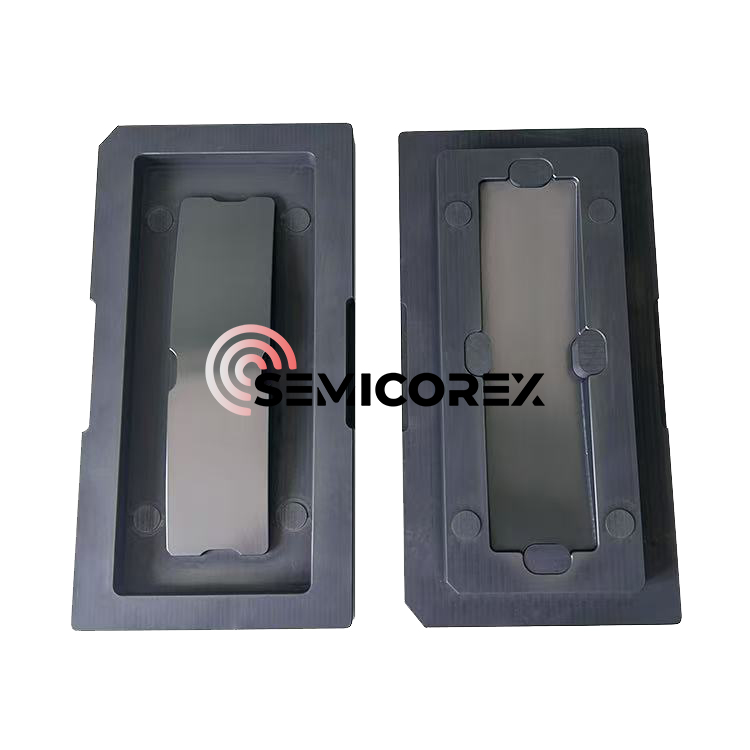
Acuan Grafit Kaca bengkok panas
Acuan Grafit Kaca Bengkok Panas Semicorex direka bentuk dengan ketepatan daripada grafit berbutir halus, ketulenan tinggi untuk memberikan rintangan suhu tinggi yang luar biasa, kestabilan kejutan haba, pelinciran diri dan ketahanan kimia, memastikan kaca melengkung 3D berkualiti tinggi dengan kecacatan yang minimum. Semicorex dipilih kerana kepakarannya yang mendalam, reka bentuk acuan termaju dan kawalan proses yang teliti, memaksimumkan hasil secara berkesan dan memenuhi keperluan pengeluaran yang paling mencabar.*
Baca LagiHantar Pertanyaan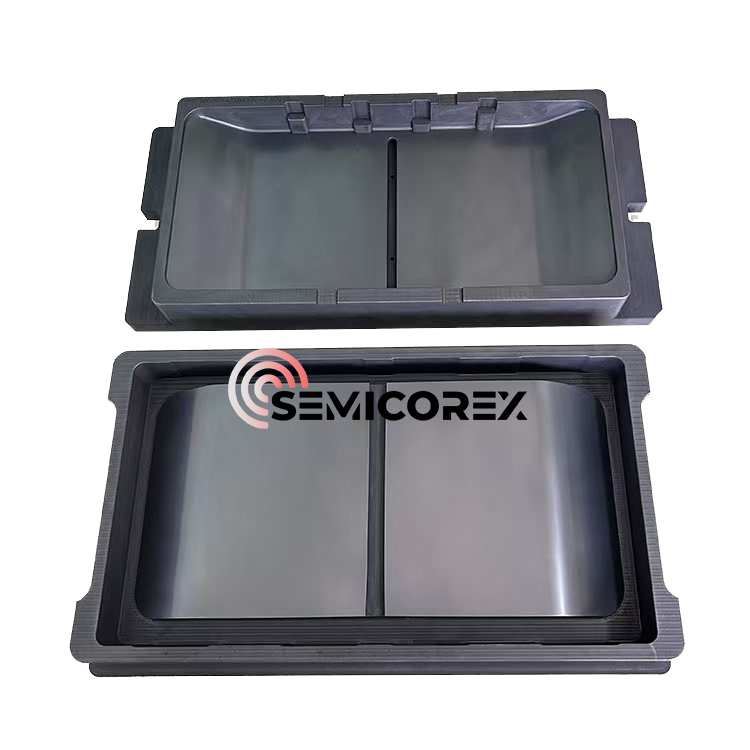
Acuan Grafit Kaca Lentur Panas 3D
Acuan Grafit Kaca Lentur Panas Semicorex 3D ialah acuan grafit isostatik mewah yang direka untuk kaca melengkung 3D lentur panas, menawarkan kestabilan haba yang sangat baik, kekonduksian terma, rintangan haus dan kakisan, meningkatkan kualiti permukaan kaca, memanjangkan hayat acuan, dan meningkatkan kecekapan dan hasil pengeluaran dengan ketara. Semicorex dipilih untuk kualiti yang boleh dipercayai, bekalan yang konsisten dan kepakarannya dalam menyediakan penyelesaian grafit termaju di seluruh dunia.*
Baca LagiHantar Pertanyaan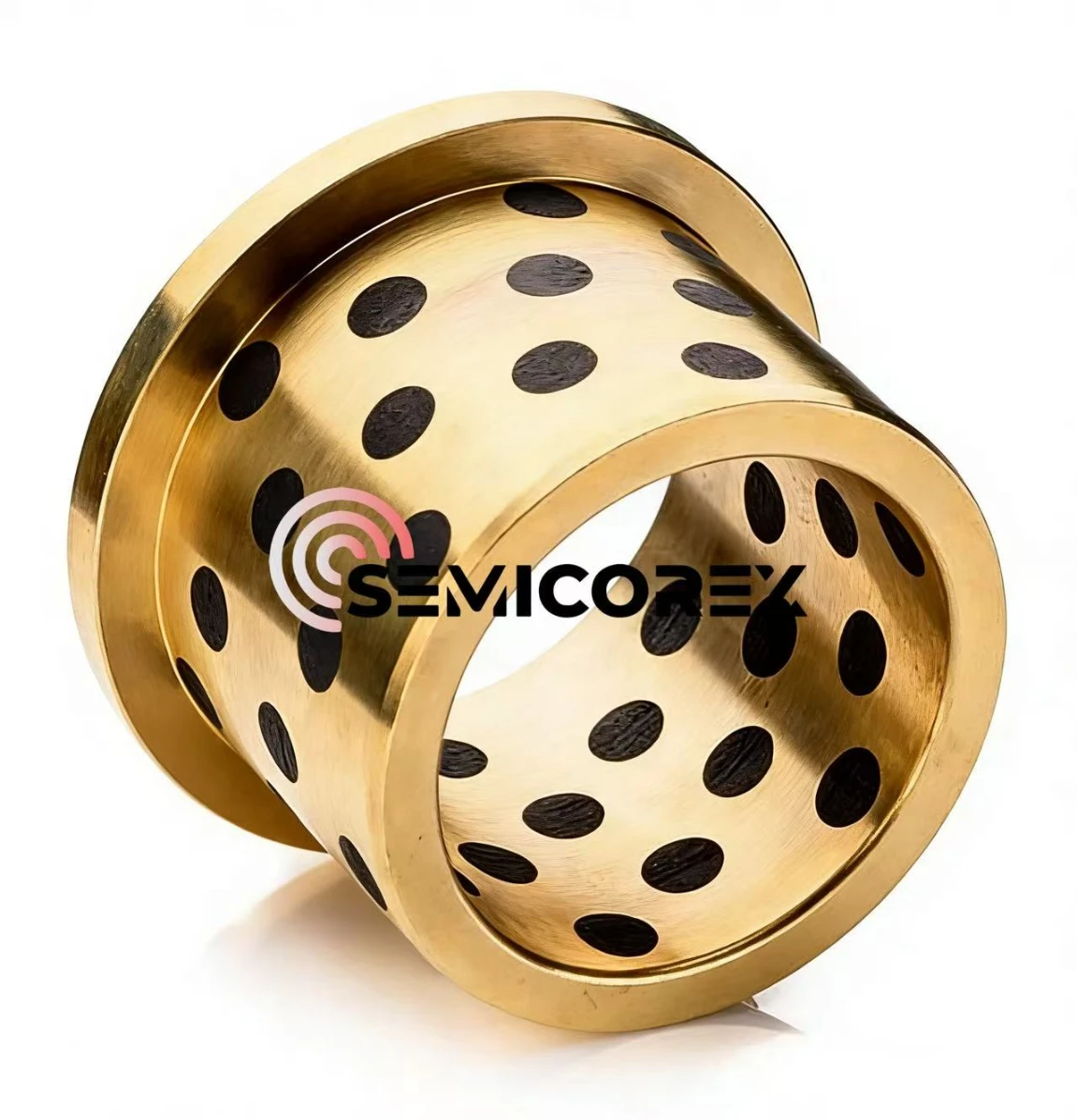
Sesendal Pelincir Sendiri Grafit
Sendal pelincir diri grafit semicorex, juga dipanggil sesendal bebas minyak, ialah komponen galas gelongsor berprestasi tinggi yang direka khas untuk beroperasi tanpa pelinciran luaran atau bekalan minyak. Dengan prestasi cemerlang, sesendal pelincir sendiri grafit Semicorex ialah penyelesaian ideal untuk peralatan yang beroperasi di bawah persekitaran yang kompleks termasuk operasi bebas minyak, suhu tinggi, beban tinggi, kelajuan rendah, anti-kotoran, rintangan kakisan dan rintangan sinaran.
Baca LagiHantar Pertanyaan
Semicorex telah mengeluarkan Grafit isostatik selama bertahun-tahun dan merupakan salah satu pengeluar dan Pembekal profesional Grafit isostatik di China. Sebaik sahaja anda membeli produk kami yang canggih dan tahan lama yang membekalkan pembungkusan pukal, kami menjamin kuantiti yang banyak dalam penghantaran cepat. Selama bertahun-tahun, kami telah menyediakan pelanggan dengan perkhidmatan tersuai. Pelanggan berpuas hati dengan produk kami dan perkhidmatan yang sangat baik. Kami amat berharap untuk menjadi rakan kongsi perniagaan jangka panjang anda yang boleh dipercayai! Selamat datang untuk membeli produk dari kilang kami.